
Do I Need a Permit for Commercial Interior Demolition in Fairfax County?
Learn whether you need a permit for commercial interior demolition in Fairfax County, what drawings may be required, and how to avoid delays before a build-out.
7/27/20264 min read
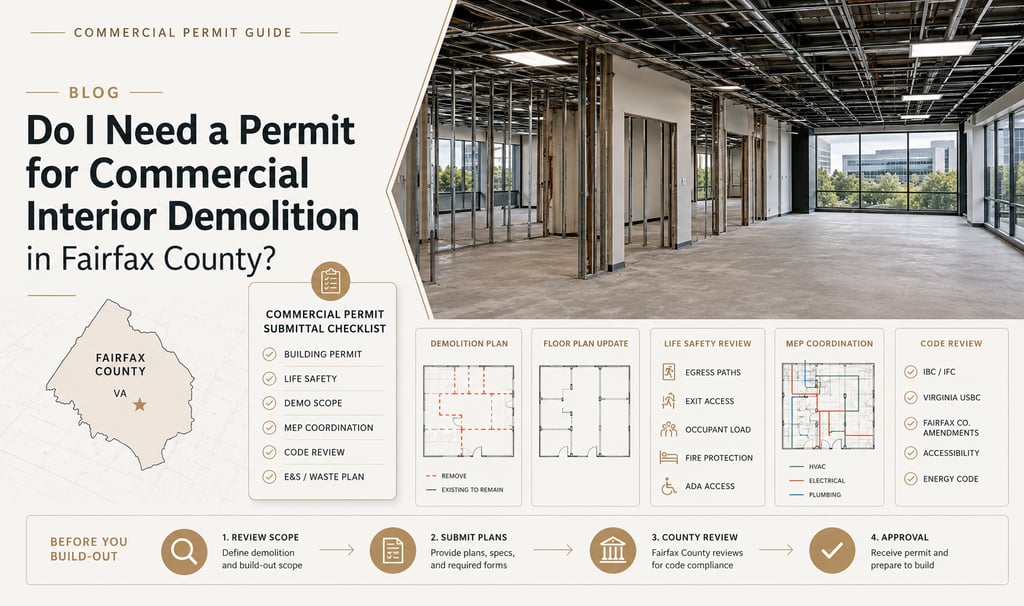
If you’re preparing a commercial space for renovation or a tenant build-out, one of the first questions is:
Do I need a permit for interior demolition?
In many cases, the answer is yes.
Commercial interior demolition can affect walls, ceilings, electrical systems, mechanical systems, plumbing, fire safety, exits, and future tenant layouts.
Even if the work seems like “just removing walls,” the county may still need to review the scope before demolition begins.
_____________________________________________________________________________________________________
What Is Commercial Interior Demolition?
Commercial interior demolition is the removal of existing interior building elements inside a commercial space.
This may include:
non-load-bearing walls
ceilings
flooring
millwork
partitions
lighting
ductwork
plumbing fixtures
electrical components
old tenant improvements
interior finishes
Interior demolition is often the first step before a new tenant layout, restaurant build-out, office build-out, or warehouse build-out.
If you want to understand how permit approvals work overall, see permit-ready architectural plans.
_____________________________________________________________________________________________________
When Interior Demolition Usually Requires a Permit
Commercial interior demolition may require a permit when the work affects:
interior walls
tenant layouts
electrical systems
mechanical systems
plumbing systems
fire-rated assemblies
exits or corridors
ceilings
structural elements
future construction work
The main issue is that demolition can affect safety, code compliance, and the future use of the space.
That’s why it should be planned before work begins.
_____________________________________________________________________________________________________
Why Interior Demolition Is Not Always Simple
A commercial space may look easy to demolish, but hidden conditions can create problems.
For example, existing walls may contain:
electrical wiring
plumbing lines
HVAC ducts
fire protection elements
low-voltage wiring
structural supports
fire-rated assemblies
Removing these without proper planning can create code issues, safety problems, and permit delays.
_____________________________________________________________________________________________________
Interior Demolition vs Full Tenant Build-Out
Interior demolition is often part of a larger tenant build-out.
The demolition phase removes existing conditions.
The build-out phase creates the new layout.
A full tenant build-out may include:
new walls
new rooms
new restrooms
updated electrical
updated mechanical systems
plumbing changes
accessibility updates
new finishes
occupancy approval
If you’re planning a larger commercial interior project, see whether you need a permit for a commercial tenant build-out in Fairfax County.
_____________________________________________________________________________________________________
What Drawings May Be Required?
A commercial interior demolition permit may require drawings that show:
existing floor plan
demolition plan
walls to be removed
areas to remain
doors or openings affected
ceilings to be removed
electrical items affected
mechanical items affected
plumbing items affected
notes about protection of existing systems
future tenant layout, if part of a larger project
The exact requirements depend on the scope.
If you want to understand what belongs in a complete permit submission, see what is included in a permit plan set.
_____________________________________________________________________________________________________
Why Demolition Plans Matter
A demolition plan helps the county and contractor understand what is being removed.
It also helps separate existing work from new work.
A good demolition plan should clearly show:
what stays
what goes
what is protected
what is modified
what is part of a later build-out phase
Without that clarity, the review process can slow down.
A vague note like “demo as needed” is usually not enough for a clear permit submission.
_____________________________________________________________________________________________________
Common Reasons Interior Demolition Permits Get Delayed
Commercial interior demolition permits can get delayed when the scope is unclear.
Common issues include:
missing demolition plan
unclear existing conditions
unclear wall removal scope
no notes about electrical or mechanical work
possible structural concerns
fire-rated walls not identified
exit paths affected
inconsistent drawings
future build-out not coordinated
If reviewers do not understand what is being removed, they may issue comments.
If you want a deeper breakdown of permit delays, read why permits get delayed in Northern Virginia.
_____________________________________________________________________________________________________
Demolition and Metal Stud Permits
Some commercial projects may use demolition and metal stud permit options before the full building plans are approved.
This can help certain projects move sooner, but it still needs to be handled carefully.
Demolition work may be allowed under a specific demolition permit, and metal stud framing may be handled separately in some cases.
However, that does not mean the full project is approved.
The larger build-out still needs proper review.
_____________________________________________________________________________________________________
What Work Should Not Start Too Early?
Even if some demolition is allowed, contractors should be careful about starting work that depends on final approval.
This may include:
trade installations
plumbing work
electrical installation
mechanical installation
permanent framing beyond allowed scope
ceiling systems
finish work
occupancy-related work
Starting too much too early can create problems if the final plans receive comments or require changes.
_____________________________________________________________________________________________________
Restaurant Interior Demolition
Restaurant demolition can be more complicated than basic office demolition.
It may involve:
kitchen equipment removal
plumbing removal
grease-related systems
hood and exhaust coordination
floor drains
restrooms
electrical changes
health department considerations
If the space is being prepared for a restaurant, the demolition should be coordinated with the future kitchen layout.
If you’re planning a food service space, see whether you need a permit for a restaurant build-out in Fairfax County.
_____________________________________________________________________________________________________
Office Interior Demolition
Office demolition may include removing:
partitions
cubicle systems
ceiling areas
lighting
flooring
doors
reception areas
conference room walls
break room elements
Even if the work seems simple, the demolition plan should still show what is being removed and how the new layout will be handled.
If you’re planning office work, see whether you need a permit for an office build-out in Fairfax County.
_____________________________________________________________________________________________________
Warehouse Interior Demolition
Warehouse demolition may involve:
office area removal
storage layout changes
restroom changes
mezzanine-related work
equipment areas
interior partitions
lighting changes
mechanical changes
Warehouse spaces can look open, but changes may still affect occupancy, exits, accessibility, and code review.
_____________________________________________________________________________________________________
Where to Check Fairfax County Requirements
You can review Fairfax County’s commercial demolition and early-start permit guidance through the county’s Flexible Permitting Options for Commercial Projects page.
_____________________________________________________________________________________________________
How Long Does an Interior Demolition Permit Take?
The timeline depends on:
scope of demolition
existing conditions
plan quality
whether the project is part of a larger build-out
whether structural items are affected
county workload
whether revisions are needed
A clear demolition plan can help the review move more smoothly.
If the drawings are unclear, the process can slow down before construction even starts.
If you want a full timeline breakdown, see how long permits take in Northern Virginia.
_____________________________________________________________________________________________________
How to Avoid Interior Demolition Permit Delays
A few steps can help:
document existing conditions clearly
prepare a demolition plan
show what stays and what gets removed
identify affected electrical, plumbing, and mechanical systems
confirm whether structural items are involved
coordinate demolition with the future build-out
avoid starting trade work before approvals are clear
Good planning makes demolition safer and helps avoid problems later.
If you want to understand what drawings are usually required, see what drawings are required for a building permit in Northern Virginia.
_____________________________________________________________________________________________________
Why Complete Plans Matter Before Demolition
Interior demolition can affect the whole project.
If demolition is not coordinated with the future design, the team may remove something that should have stayed or miss something that creates problems later.
Complete plans help:
clarify the demolition scope
protect existing systems
support permit review
reduce contractor confusion
avoid delays during the build-out
keep the project moving toward approval
Demolition is not just the first step.
It sets the tone for the entire commercial project.
_____________________________________________________________________________________________________
Final Thoughts
In Fairfax County, commercial interior demolition often requires permit review, especially when it is part of a larger tenant build-out or interior alteration.
The safest approach is to define the scope clearly, prepare demolition drawings, and coordinate the work with the future build-out plans.
Clear documentation can help avoid delays, confusion, and costly mistakes once construction starts.
_____________________________________________________________________________________________________
Need Help With Commercial Interior Demolition Plans?
If you have a commercial interior demolition or build-out project coming up and want help understanding what drawings may be required, feel free to reach out through our contact page.
We can take a quick look and help you understand what may be needed before submission.
Follow Us
Connect with us through our social media
Contact Us
© 2024. All rights reserved.