
Do I Need a Permit for a Commercial Tenant Build-Out in Fairfax County?
Learn whether you need a permit for a commercial tenant build-out in Fairfax County, what drawings may be required, and how to avoid approval delays.
7/6/20263 min read
If you’re planning a commercial tenant build-out in Fairfax County, one of the first questions is:
Do I need a permit?
In most cases, the answer is yes.
A tenant build-out usually involves interior alterations, new layouts, walls, finishes, electrical work, mechanical work, plumbing work, or changes to how the space is used.
Because of that, the county needs to review the plans before construction begins.
_____________________________________________________________________________________________________
What Is a Commercial Tenant Build-Out?
A commercial tenant build-out is when an existing commercial space is modified for a new tenant or business use.
This can include:
new interior walls
new office layouts
restaurant layouts
retail space layouts
warehouse office areas
new restrooms
mechanical, electrical, or plumbing changes
ceiling and lighting changes
accessibility-related updates
The goal is to make the space work for the new business while meeting code and permit requirements.
If you want to understand how permit approvals work overall, see permit-ready architectural plans.
_____________________________________________________________________________________________________
When a Commercial Build-Out Requires a Permit
A commercial tenant build-out usually requires a permit when the work includes:
interior alterations
new tenant layout
interior demolition
added square footage
new walls or partitions
mechanical changes
electrical changes
plumbing changes
modular furniture installation
Fairfax County’s commercial addition and alteration permit page lists projects like interior alterations, interior alterations for an existing tenant or owner, interior demolition, modular furniture, and new tenant layout under commercial addition/alteration permits.
_____________________________________________________________________________________________________
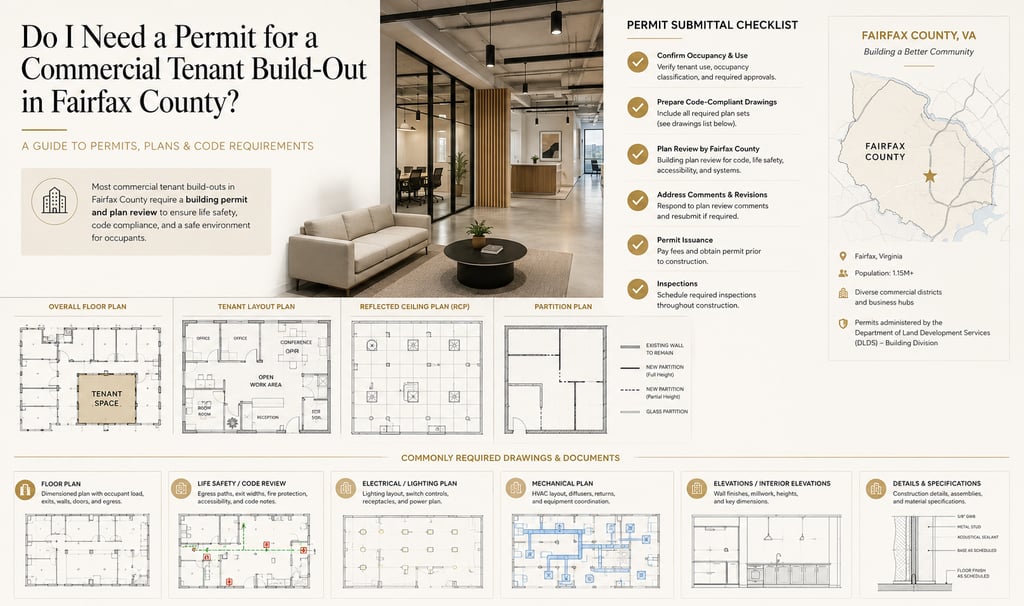
What Drawings May Be Required?
A commercial tenant build-out permit submission may require drawings that show:
existing floor plan
proposed floor plan
demolition plan
life safety plan
wall and partition layout
reflected ceiling plan
electrical layout
mechanical layout
plumbing layout
accessibility details
code information
sections and details, if needed
Commercial projects usually need more coordination than simple residential projects because multiple systems are involved.
If you want to understand what belongs in a complete permit submission, see what is included in a permit plan set.
_____________________________________________________________________________________________________
Why Commercial Build-Out Permits Get Delayed
Commercial build-outs can get delayed when the plans are incomplete or not coordinated.
Common issues include:
unclear scope of work
missing code information
incomplete life safety details
missing mechanical, electrical, or plumbing plans
unclear demolition scope
accessibility issues
inconsistent dimensions
missing occupancy information
If reviewers do not have enough information, they’ll usually issue comments and request revisions.
If you want a deeper breakdown of permit delays, read why permits get delayed in Northern Virginia.
_____________________________________________________________________________________________________
Why the Existing Space Matters
For commercial build-outs, the existing condition of the space matters a lot.
The county may need to understand:
current layout
previous use of the space
proposed new use
existing walls and exits
existing restrooms
existing mechanical systems
existing electrical panels
existing plumbing locations
A project can become more complicated if the new business use is different from the previous use.
That is why the drawings should clearly show both existing and proposed conditions.
_____________________________________________________________________________________________________
New Tenant Layouts Need Clear Plans
A new tenant layout is one of the most common reasons commercial spaces need permit drawings.
The county needs to review:
how people move through the space
where exits are located
how rooms are used
whether the layout meets accessibility requirements
whether the space has proper mechanical, electrical, and plumbing coordination
If the layout is unclear, the review process slows down.
If you want to understand how drawings help with approval, see permit drawings for building permits.
_____________________________________________________________________________________________________
Restaurant Build-Outs May Need Extra Coordination
Restaurant spaces can be more detailed than basic office build-outs.
They may involve:
kitchen layout
hood and ventilation systems
grease-related plumbing coordination
restroom requirements
seating layout
fire safety coordination
equipment placement
accessibility requirements
Because restaurants involve multiple systems, the plans need to be coordinated before submission.
This is especially important for businesses that want to avoid delays before opening.
_____________________________________________________________________________________________________
Warehouse and Office Build-Outs
Commercial build-outs are not limited to restaurants or retail spaces.
They can also include:
warehouse offices
storage layouts
employee areas
restrooms
break rooms
conference rooms
office partitions
Even if the work seems simple, changing the layout inside a commercial building may still require permit review.
_____________________________________________________________________________________________________
Where to Check Fairfax County Requirements
You can review Fairfax County’s commercial addition and alteration permit guidance through the county’s Addition/Alteration Commercial page.
_____________________________________________________________________________________________________
How Long Does a Commercial Build-Out Permit Take?
The timeline depends on:
project size
use of the space
plan quality
number of systems involved
county workload
whether revisions are needed
Commercial projects often take longer than simple residential projects because more code items and building systems are involved.
If you want a full timeline breakdown, see how long permits take in Northern Virginia.
_____________________________________________________________________________________________________
How to Avoid Commercial Permit Delays
A few steps can help:
define the full scope early
show existing and proposed layouts clearly
coordinate architectural, mechanical, electrical, and plumbing plans
include code information
address accessibility early
show demolition work clearly
make sure all drawings match
Clear drawings make the review process easier for both the county and the project team.
If you want to understand common issues that slow approvals, see common zoning mistakes in Northern Virginia.
_____________________________________________________________________________________________________
Why Complete Plans Matter for Commercial Projects
A commercial tenant build-out depends on more than one drawing.
The plans need to work together.
If the architectural layout shows one thing but the electrical, plumbing, or mechanical plans show something else, the review process can slow down quickly.
Complete and coordinated plans help:
reduce review comments
avoid confusion
support faster approval
help contractors understand the work
keep the project moving toward construction
_____________________________________________________________________________________________________
Final Thoughts
In Fairfax County, most commercial tenant build-outs require a permit because they involve interior alterations, new tenant layouts, trade work, and code review.
The best way to avoid delays is to start with clear, complete, and coordinated drawings.
A strong permit plan set makes the review process smoother and helps the project move forward with fewer surprises.
Follow Us
Connect with us through our social media
Contact Us
© 2024. All rights reserved.